Do You Like Chocolate?? Do You Like PIZZA??? Do you spend most of your day just looking at and dreaming about food?? If you do, then you've come to the right place!!

 No. I'm not giving out food here, Today (or tonight depending on your preference) I'm going to baffle your very senses....*spoiler alert*
To all the Chocoholics out there, I have one question.
"How would you describe the taste of chocolate to someone who has never had it?"
C'mon. Give it a thought. How would you? Work that Frontal cortex of yours!
Don't just continue reading expecting me to do it for you! Just give it a little more thought. THINK!
Alright. If you've given up then I'll help you. A professional chocolate taster (Yes, that's a real job. Already ahead of you. I've found 2 job openings in my area) uses all his/her senses to grade chocolate - Look, Feel, Sound, Smell and then lastly the taste. Here's a small excerpt from a blog on just tasting chocolate.
Well the correct answer to my question is....Taste cannot be put into words accurately. Its same for other senses too, I guess we all agree on the unique proportions of bitterness, sweetness, sourness and saltiness that makes up the flavour of the Heavenly Joy, that is chocolate. But what exactly is sweetness to you?
The pleasant feeling of sweetness....is that the same for the all of us? Or are each of us experiencing a different variant of the pleasant feeling? Is my experience of the bitter taste of pickle the same as that that you would experience? Is the extravagant magnificent marvelous taste of pizza, the same for all of us?


Now that I've got your full attention, I'd like to switch over to the sense of SIGHT which was my original topic.
Is my Red the same as yours?
From kindergarten onward we have been taught, "This is an Apple. Apple is Red in colour." We see the apple and learn that anything whose colour resembles that of an apple should also be red. But what if, in my perception, the colour is blue but I call it red?
Is it possible?
Yes. It is.
Scientists have proven through experiments on monkeys and rodents that One person's red might be another person's blue and vice versa, You might really see blood as the color someone else calls blue, and the sky as someone else's red. But our individual perceptions don't affect the way the colour of blood, or that of the sky, make us feel. Colour perception emerges in our brains in response to our experiences of the outside world, but that this process ensues according to no predetermined pattern.
Male squirrel monkeys have only two types of colour-sensitive cone cells in their eyes: green-sensitive cones and blue-sensitive cones. Lacking the additional information that would be picked up by a third, red-sensitive cone, the monkeys can only perceive the wavelengths of light we call "blue" and "yellow;" to them, "red" and "green" wavelengths appear neutral, and the monkeys cannot find red or green dots amid a gray background. In the experiment, scientists injected a virus vector into the monkeys' eyes that randomly infected some of their green-sensitive cone cells. The virus inserted a gene into the DNA of the green cones it infected that converted them into red cones. This conferred the monkeys with blue, green and red cones. Although their brains were not wired for responding to signals from red cones, the monkeys soon made sense of the new information, and were able to find green and red dots in a gray image. (Possible cure for colour blindness and also to confer added UV visibility to normal humans like in some bird species. Time to see if ultra-violet is in any way a shade of violet). Even though neurons in the monkeys' brains were wired to receive signals from green cones, the neurons spontaneously adapted to receiving signals from red cones instead, somehow enabling the monkeys to perceive new colours. The question is, what did the monkeys think the new colours were?


To all the Chocoholics out there, I have one question.
"How would you describe the taste of chocolate to someone who has never had it?"
C'mon. Give it a thought. How would you? Work that Frontal cortex of yours!
Don't just continue reading expecting me to do it for you! Just give it a little more thought. THINK!
Alright. If you've given up then I'll help you. A professional chocolate taster (Yes, that's a real job. Already ahead of you. I've found 2 job openings in my area) uses all his/her senses to grade chocolate - Look, Feel, Sound, Smell and then lastly the taste. Here's a small excerpt from a blog on just tasting chocolate.
Place a small square of chocolate in your mouth and let it melt on your tongue, making sure to cover all of your taste buds. Your tongue will pick up bitter, sweet, salty and sour notes, and your sense of smell will help you more specifically describe the chocolate. Pay attention to the mouthfeel of the chocolate. Is it creamy or chalky? Does it break down immediately in your mouth, or does it melt slowly? Does the chocolate have a cooling effect on your mouth? What flavor notes do you notice at the beginning? In the middle? At the end? Is there a flavor note that lingers in your mouth long after the chocolate is gone? (Mmm yeah! Its the bad breath)Droooooll.
Well the correct answer to my question is....Taste cannot be put into words accurately. Its same for other senses too, I guess we all agree on the unique proportions of bitterness, sweetness, sourness and saltiness that makes up the flavour of the Heavenly Joy, that is chocolate. But what exactly is sweetness to you?
The pleasant feeling of sweetness....is that the same for the all of us? Or are each of us experiencing a different variant of the pleasant feeling? Is my experience of the bitter taste of pickle the same as that that you would experience? Is the extravagant magnificent marvelous taste of pizza, the same for all of us?


Now that I've got your full attention, I'd like to switch over to the sense of SIGHT which was my original topic.
Is my Red the same as yours?
From kindergarten onward we have been taught, "This is an Apple. Apple is Red in colour." We see the apple and learn that anything whose colour resembles that of an apple should also be red. But what if, in my perception, the colour is blue but I call it red?
Is it possible?
Yes. It is.
Scientists have proven through experiments on monkeys and rodents that One person's red might be another person's blue and vice versa, You might really see blood as the color someone else calls blue, and the sky as someone else's red. But our individual perceptions don't affect the way the colour of blood, or that of the sky, make us feel. Colour perception emerges in our brains in response to our experiences of the outside world, but that this process ensues according to no predetermined pattern.
Whatever be the colour of the sky, whether it is your blue or my blue, it will always remain constant - within the wavelength range of 450 to 495 nm (depending on the time of day of course).
I've covered taste and sight. The rest you can think for yourself.
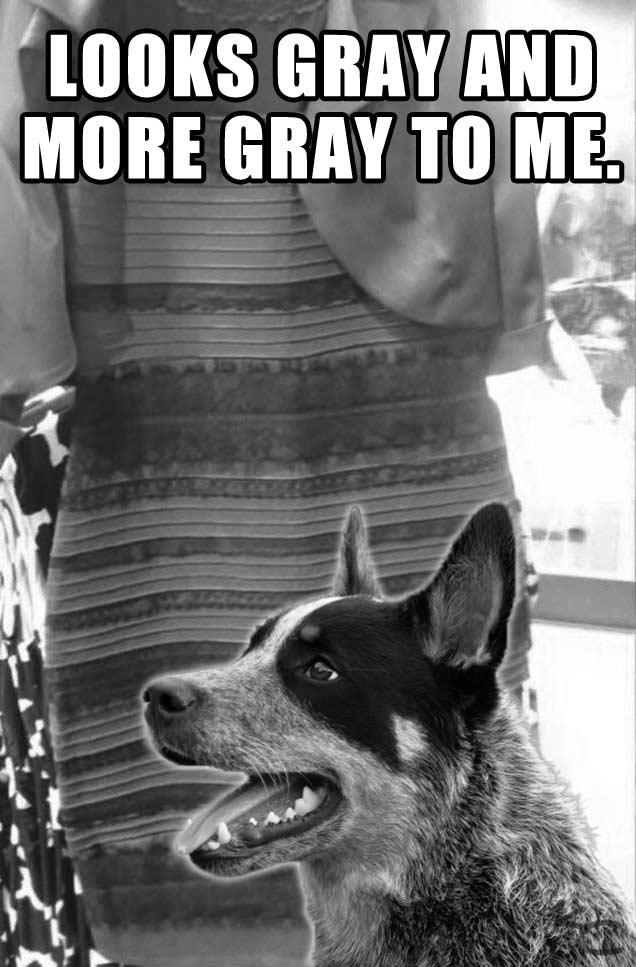
_________
PS: Orange is the new Black.


No comments:
Post a Comment